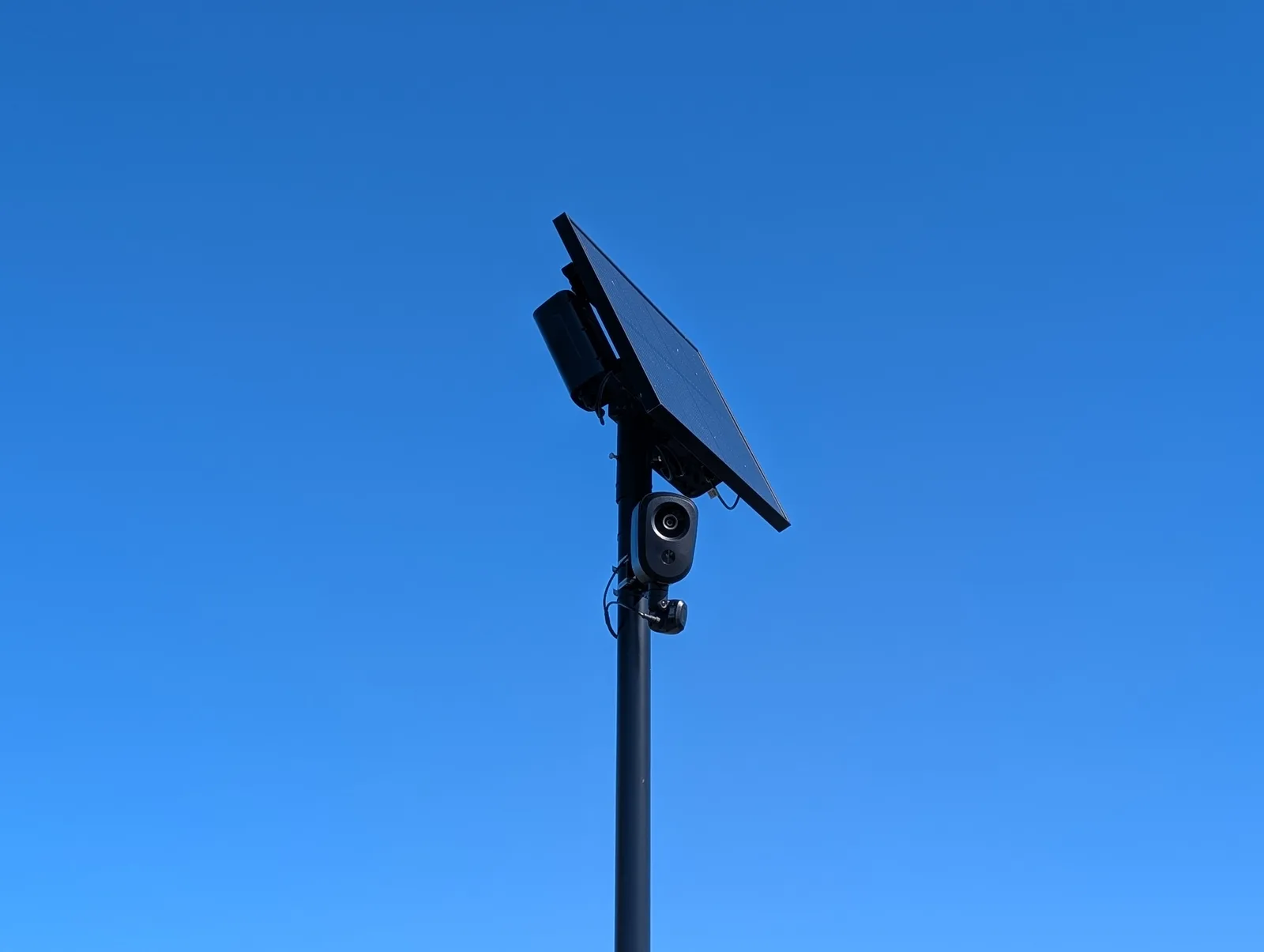
Police Chief Matt Hamby proposed a 14-day data limit and tighter search rules. Residents can weigh in at a 5:30 p.m. session Nov. 24 before the council acts.
Greer’s Flock license plate cameras will stay covered after their 90-day suspension ends Nov. 19. They will stay off until City Council decides what to do with them.
A council member asked for that at Tuesday’s workshop on the cameras. “We’ll leave them covered until council definitively acts,” the city’s administration answered, the city’s video of the workshop shows.
The public gets its turn next. The council will hold a public information session on the cameras at 5:30 p.m. Tuesday, Nov. 24, at City Hall, the city’s meeting recap says. The regular council meeting follows at 6:30 p.m.
Mayor Rick Danner opened the workshop by saying residents could “weigh in one way or the other” at the next meeting. He said the council would then have a chance to vote, and that the cameras “will certainly be on our agenda” for Nov. 24.
Why the cameras were covered
City Administrator Andrew Merriman ordered access cut off and the cameras physically covered for 90 days from Aug. 21. The city’s recap says that came after the city fired two police officers who broke department policy on the use of the license plate readers.
Police Chief Matt Hamby addressed it at the start of his talk. He said two former officers misused the system “as they attempted to maneuver through their own personal or domestic relationships,” and were dealt with through the department’s disciplinary process.
What the chief told the council
Hamby said the cameras capture vehicle information, not images of the people inside, the city’s recap says. He said they are used to solve crimes that have already happened.
He gave these figures on how much of Greer the cameras see:
- The city has 10 Flock cameras.
- Each covers about 70 feet of road, or about 700 feet in all.
- Greer has about 286 miles of roads, or roughly 1.5 million linear feet.
He also listed crimes from the past 90 days where he said the cameras could have helped. One was a shooting in which 16 rounds hit a home. No one was hurt, and he said the case is unsolved.
The new rules the police propose
Hamby said the department wants these limits. He said some are already set on the Flock platform:
- every search must carry a case number and be written up in an incident report
- data kept for 14 days instead of 30
- searches only by the criminal investigations team and command staff, instead of all sworn officers
- data shared only with local law enforcement agencies in South Carolina, with no federal or state-run agencies
- only command staff may add a vehicle to the local “hot list”
- quarterly audits by the investigations division captain, and annual retraining
He said the department is finishing a public transparency portal for the city’s website if the council lets it keep the cameras. It would show how many cameras the city runs, how many searches officers make every 30 days and why, and how many alerts come in.
What residents said
A resident who said he is a retired Navy intelligence specialist spoke at the regular meeting that followed, the recap says. He urged the council to limit access to the system to protect investigations, residents’ privacy and the city from liability for misuse.
The cameras have come up in the public forum at every regular council meeting since September. Our story before the workshop has that history.
What it means for you
- The cameras stay off for now. They remain covered past Nov. 19 until the council acts.
- You can speak or listen on Nov. 24. The public information session is at 5:30 p.m. Tuesday, Nov. 24, at City Hall, 301 E. Poinsett St. The regular meeting at 6:30 p.m. has a public forum.
- You can watch the briefing. The full workshop is on the city’s YouTube video.
- Contact the council before then. Council member contacts are on our City Hall contacts page.
Have your say